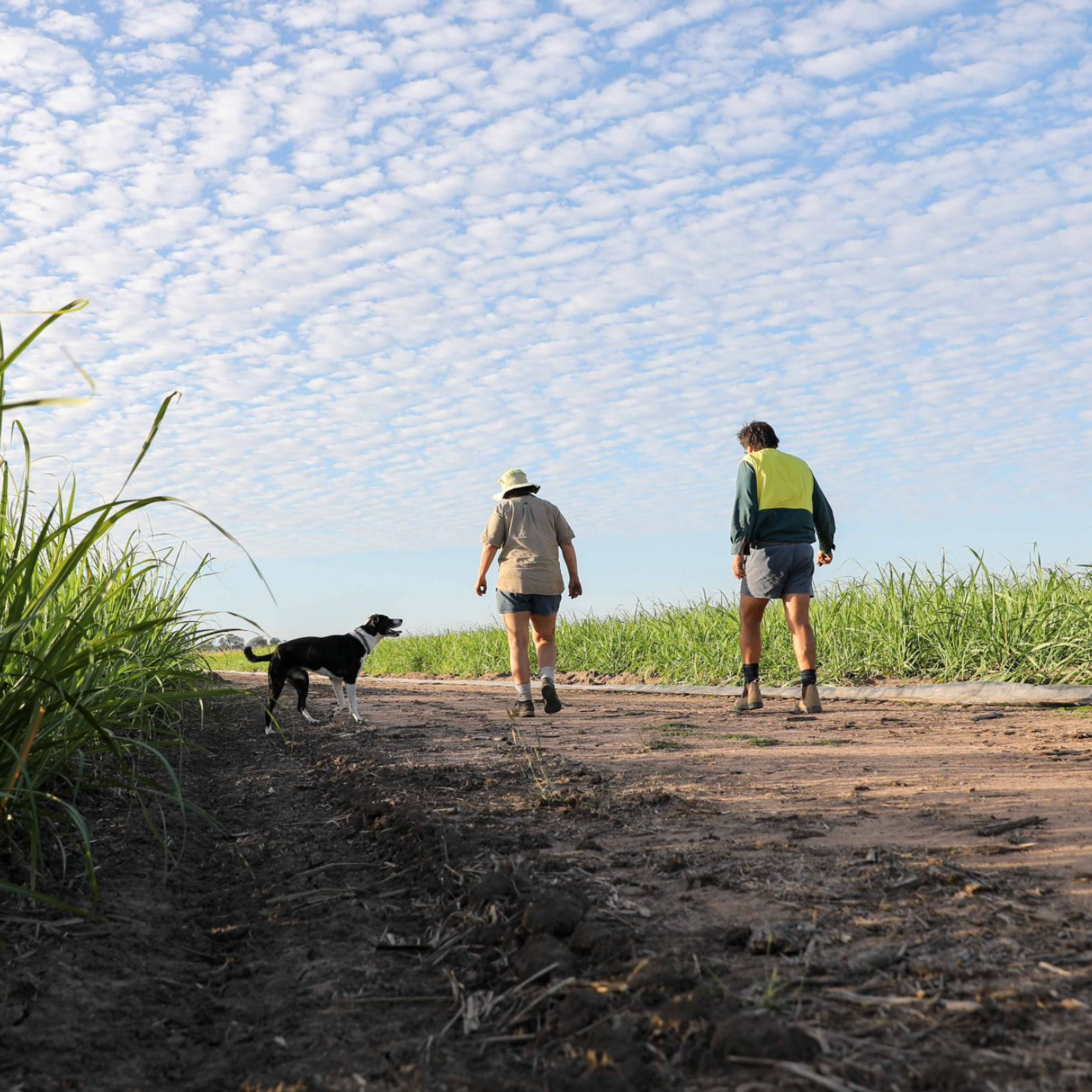
Hayward Hydraulics’ evolution was founded on something Rob didn’t need to be taught. Care. And he makes sure his staff do, too. “I didn't come from a real wealthy family, so we were brought up to work; you work, you do the job right, you get paid,” he said.
Read the full story
Not every business starts with a blueprint. For some, it begins as a calling… in more ways than one. Burdekin local Robert Hayward had been in the hydraulics industry since he was 18. A diligent worker who loved his job, he quickly built a reputation locally as one of the best in the business.
Read the full story.jpeg)
Makinex Renewables is setting an ambitious target, saving 100 million litres of diesel in five years. In an industry long reliant on traditional diesel generators, the Australian-made and owned company is helping reshape how remote and off-grid operations power their sites.
Read the full story
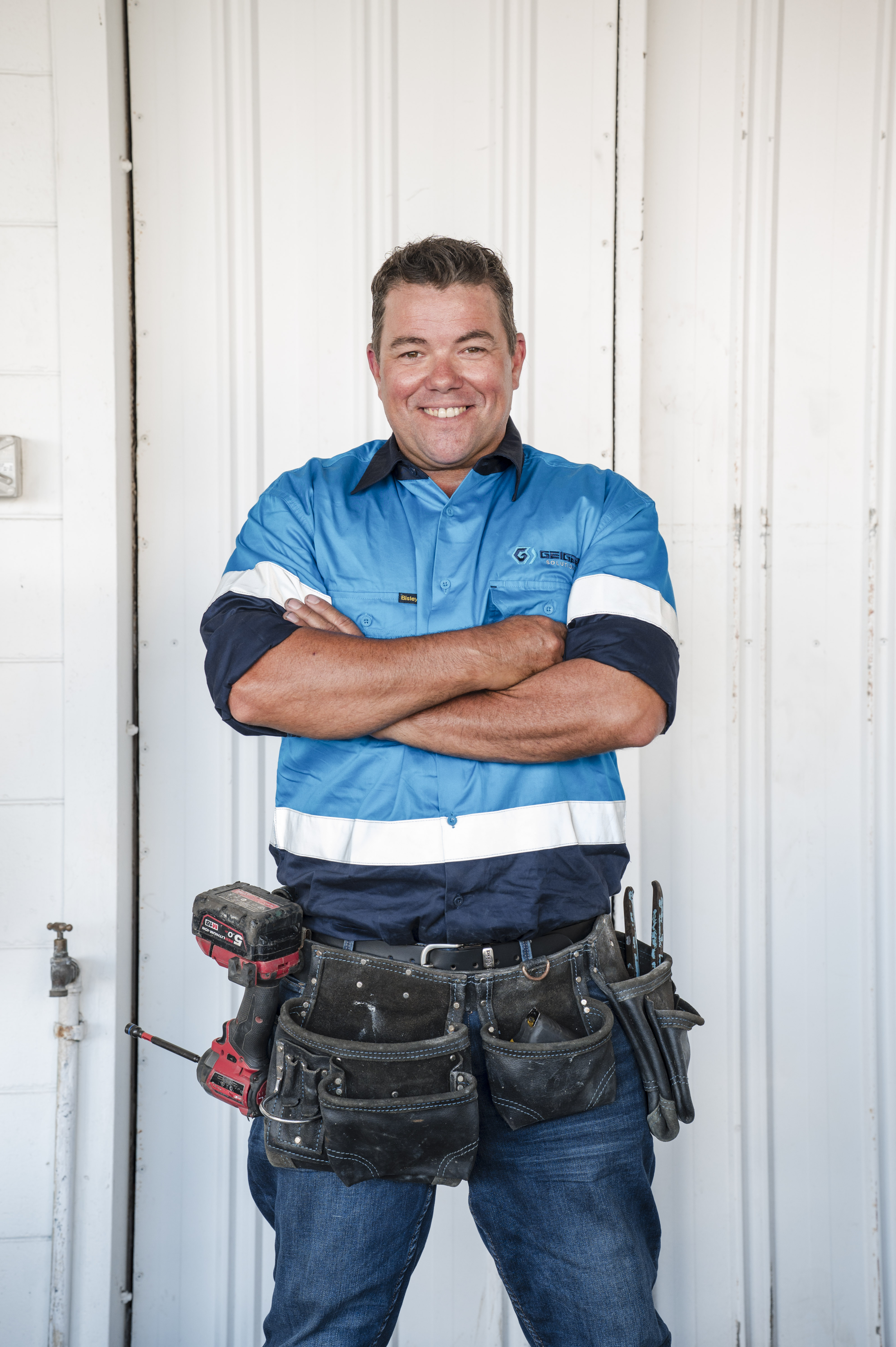
As the CEO of Geiger Solutions, Brad Geiger has helped shape one of Mackay’s most respected trade businesses, delivering roofing and plumbing services across the region and beyond. But behind the business is a man whose approach is refreshingly straightforward: work hard, do the job properly, look after your people and never lose your sense of humour along the way.
Read the full story
The story of CANEGROWERS on the Herbert is unique. CANEGROWERS, or as it was first known Queensland Cane Growers Association (QCGA), came about when the Queensland Government legislated for commodity associations with compulsory membership and farmer levies. Yet even before the imposition of compulsory association there was a highly organized association advocating strongly for sugar farmers on the Herbert, the Herbert River Farmers’ League (HRFL)
The Herbert River CANEGROWERS stands on the shoulders of a group of small farmers whose aspirations to grow sugar cane were ridiculed by the planters. Nevertheless, six men, only two of whom were English speakers, took on the Colonial Sugar Refining Company (CSR) in 1882 as the Herbert River Farmers’ Association (HRFA), and achieved in 1884 what seemed impossible, a contract to supply cane to CSR. It was the first association in north Queensland to solely represent small sugar growers’ interests rather than those of larger planters and was the voice of the small farmers until the formation of the Herbert River Farmers’ League (HRFL) in 1896.
When the Herbert River district branch executive of the QCGA was formed in February 1926, followed by the Herbert River Cane Growers Association (HRCGA) in February 1932 it inherited branch associations, structure and roles already established by the HRFL. It operated out of the HRFL’s building until the Farmers’ Building opened in 1934. Moreover, the first executive positions of the HRCGA were held by HRFL members who contributed their valuable organizational experience.
This strong associative urge dating from 1882 has defined the strength and determination of CANEGROWERS on the Herbert as it has steered the local industry with a united voice through the many challenges that have beset the industry in the last 100 years.

Since 1926 Canegrowers Herbert River has long been the cornerstone of support for sugarcane farmers in the Herbert River district. Their unwavering commitment to advocating for and assisting their members has made them an essential partner in navigating the challenges of modern farming. Offering a range of services, from advocacy and policy influence to essential services such as payroll, Canegrowers Herbert River ensures that local growers have the resources they need to thrive.
One of the most significant contributions Canegrowers Herbert River provides is its robust advocacy for growers' interests. Sugarcane farming faces numerous pressures, fluctuating market prices, environmental regulations, and the ever-changing climate. Canegrowers Herbert River plays an active role in representing its members at local, state, and federal levels. Through strong advocacy, they ensure that growers' voices are heard on critical issues.
Their work with various government bodies helps shape policies that protect the interests of cane farmers, ensuring the sustainability of the industry in the Herbert River region. This kind of representation is invaluable to growers who might not have the time or resources to engage in these important discussions directly.
The organisation is deeply engaged with local issues, working closely with farmers to understand their specific challenges and helping to find practical solutions. Whether it's dealing with infrastructure concerns, road safety, transport, Canegrowers Herbert River plays a vital role in addressing these issues and working toward positive outcomes. By collaborating with local councils, government bodies, and industry partners, they ensure that farmers’ concerns are heard and resolved in ways that benefit both growers and the wider community.
Every season alone Canegrowers Herbert River assists members with transport issues including permitting and regulation, providing guidance with BMP, compliance audits, permit and notification requirements, drainage, CCS and cut to crush discrepancies, siding issues, cane supply contract matters and many more pertinent issues.

After a century of ardent advocacy, CANEGROWERS remains one of the strongest voices for growers in the Burdekin and beyond. Yet despite the many hard-fought victories of its illustrious past, the organisation now finds itself confronting a new era of challenges, making its current work more critical than ever.
The headwinds are already gathering. With global sugar prices softening and input costs rising, growers in the region are entering an increasingly uncertain market. In some cases, the squeeze is already being felt on the ground.
But despite the seemingly gloomy picture of the current sugar market, CBL Director Owen Menkens says there are answers for growers, and that they may be closer than we think.
“The big buzzword at the moment, obviously, is ethanol,” Menkens says.
"Along with ethanol, there’s sustainable aviation fuels, both of which are very exciting… But if the biofuels industry is going to happen in Australia, it has to happen now.”
Menkens has led a years-long push for biofuel mandates across the country in hopes of opening a reliable revenue stream for Australian growers beyond traditional sugar crystal.
Up to now, those calls have fallen on deaf ears. However, CBL Manager Greg Watson anticipates real steps forward over the next decade, if not sooner.
“There have been many false dawns with different uses for our sugar cane, and a lot of people have come into the district promising all of these wonderful products which just haven't gotten anywhere,” said Watson.
“But from what we've seen the last couple of years, the momentum is building, and the pace of that momentum is just increasing considerably. We can see the bio economy providing a tremendous growth transition path to take industry to the next level within the next five to 10 years.”
Menkens stressed that, in the meantime and beyond, farmers would need to embrace the rapid technological advances reshaping the industry in order to help navigate current and future markets.
“We have to stay ahead of technology," said Menkens.
"The margins are getting smaller, so you just have to be able to do it cheaper and better.”

Populin Enterprises – Automatic Billet Planter
In the early 1970s, Home Hill cane farmers and brothers Lui and Peter Populin (deceased) reshaped the global cane planting industry with a world-first innovation: the single-row automatic billet planter.
Before their breakthrough, cane planting was a labour-intensive process requiring large crews to manually place cane billets into the ground. The Populin brothers’ invention mechanised the process, dramatically reducing labour requirements and increasing efficiency.
The prototype was first used on the Populin family farm on Groper Creek Road, where it quickly proved its value in real farming conditions. Demand from growers soon followed. In 1973, the brothers introduced an improved two-row semi-mounted model capable of carrying two tonnes of chopper-harvested plant cane and planting at a rate exceeding two acres per hour.
Their design was officially patented on March 16, 1976. Manufactured locally through Populin Enterprises in Home Hill, the planters were sold across Australia and exported to major sugar-producing regions including Brazil, the United States and Hawaii. Modern billet planters still trace their design back to the Populin brothers’ original concept.
Ray Menkens – Lay-Flat Plastic Fluming System
In the mid-1960s, Burdekin cane grower Ray Menkens began experimenting with new irrigation methods that would ultimately transform water management across the sugar industry.
Seeking an alternative to traditional open earth drains and pipe systems, Menkens trialled yellow lay-flat plastic for irrigation fluming. The early material proved unsuitable for North Queensland conditions, melting in the sun and lacking durability.
Determined to improve the concept, Menkens travelled to Sydney to work directly with a plastics manufacturer’s engineer. Together they developed a far more robust black lay-flat fluming capable of withstanding the region’s harsh climate. To encourage adoption, the product was released with a 25-year guarantee.
Early versions included screw-in cups moulded into the plastic, but practical field experience led to further refinement. With input from the Rubiola family, the system evolved to the cup-insertion method widely used today. Graeme Haller later designed a specialised fluming roller, improving efficiency again. By the mid-1970s, lay-flat plastic fluming had become widely adopted, delivering major labour savings for irrigation across the sugar industry.
A Cannavan & Sons – Self-Propelled Over-the-Row Cane Harvester
In the late 1950s, Burdekin innovator Arthur Cannavan (deceased) set out to mechanise one of the most physically demanding tasks in the sugar industry: harvesting cane.
With a clear vision and the support of his family, Cannavan approached a local blacksmith’s workshop in 1959 to help bring his ideas to life.
The result was a pioneering self-propelled over-the-row cane harvester that introduced a completely new approach to harvesting. Cannavan developed a system using augers and rollers to feed cane into a cutting mechanism, combined with his distinctive “chop and throw” method that cut the cane into billets and delivered them directly for transport.
The machine proved its worth quickly. In 1961, Cannavan’s harvester delivered the first chopped cane to Inkerman Mill, marking a significant milestone in the mechanisation of the industry.
Many of the fundamental concepts he developed, including the use of augers, rollers and billet chopping, remain core features of modern cane harvesters, cementing Cannavan’s place as a pioneer of mechanised harvesting.

In another universe, Steve Pilla is roaming hospital halls. In this one, fate led the Giru native back to cane farming after a brief stint in nursing, and he hasn’t looked back since.
After dipping his toe in the world of healthcare in the late 1980’s early 1990s, Pilla returned to the family farm in Giru, continuing a story that began when his grandfather arrived in Australia in 1939 and bought the property a decade later. It was a path that felt inevitable in hindsight.
“I grew up always wanting to be on the farm,” Steve says.
A third generation cane farmer, Steve went into business with his father in 1998. When his father passed away in 2015, it was left to Steve to guide the farm forward.
And he did just that.
In the meantime, he would join the CANEGROWERS Burdekin Limited Board as a Director in 2013, eager for answers in what was a rocky period for the local industry. Seeing the organisation’s extensive work for farmers first-hand kept him on the board for another 13 years and counting.
Despite the work of CANEGROWERS, Steve says the industry’s real strength lies in the steadfastness of farmers themselves.
"It isn’t looking good as far as low prices and sugar at the moment, and looks like our inputs are going to climb this year… But growers always seem to show resilience, and the industry seems to pull through challenging times,” he said.
“I'm looking forward to us getting through this low spot again and getting on the other side and being both environmentally sustainable and financially viable moving forward.”

Owen Menkens grew up surrounded by farming, even if he briefly looked beyond it.
A fourth-generation cane farmer from Home Hill, Owen spent his holidays working on the farm his great-grandfather first purchased decades ago. Despite that early exposure to the industry, he initially opted for a cooler, more predictable career, heading to university to study accounting.
Though eventually, the pull of the land proved stronger.
“It’s in your blood,” says Menkens.
“I went through periods where I didn't want to [farm]… but it was always there.”
With that epiphany, by the late 1990s, he was back in the paddock. Nearly 30 years later, he’s still there, now growing around 36,000 tonnes of cane each year while representing growers from the Burdekin to the global stage.
Menkens joined the CANEGROWERS Burdekin Limited board as a director in 2010. From that platform, he promptly climbed the ranks, now holding the chairmanship of both CANEGROWERS Queensland and CANEGROWERS Australia.
Reaching the top was never the endgame for Owen, but rather an added bonus.
“At the end of the day, whether you're a director of [one of the branches], or where I am, it’s all about just trying to get good results, and trying to make the industry better,” Menkens says.
That drive has kept him at the forefront of the industry, involving legal disputes, landmark sugar marketing legislation, and the introduction of the code of conduct that have given growers more control and better tools to manage risk.
Those experiences have given Menkens a reason to believe in the future of the industry.
“As long as we stay at the cutting edge of technology and keep ourselves open to new ideas, we'll always keep going.”

Although not a farmer in the conventional sense, Greg Watson has a passion for the sugar industry.
Born and raised in Home Hill, Greg grew up surrounded by cane fields. His grandparents used to own a farm, his parents worked as cane harvesting contractors, and Greg spent much of his childhood helping with the family’s harvesting contract.
But his early career took him down a different path.
After finishing high school, he studied commerce at James Cook University before embarking on a career in banking, first in business, then agribusiness. A decade later, he switched to financial planning, eventually becoming self-employed in a practice for 13 years.
Eventually, though, his roots in the sugarcane industry drew him back to the heart of it.
He would go on to serve as Executive Officer for the CRC for Sustainable Sugar Production, followed by a role as Grower Relationship Manager for QSL in the Burdekin and Herbert River regions, before returning to the Burdekin as Manager of CANEGROWERS Burdekin Limited in 2020.
This time, however, he returned to the Burdekin with decades of experience in financial services, along with his home-grown passion for the region and the personal approach that defines his work today.
“I'm just always somebody who really enjoys helping people where I can,” says Greg.
“I try not to say no, which is probably a downfall in some respects, but I just try my best to deliver services to growers and assist them when in need.”

Farming has always been in Glenn Betteridge’s blood.
A third-generation cane farmer from Home Hill, Glenn has spent his whole life in the region surrounded by the cane crop he goes to battle for today.
“I was born in Home Hill Hospital, and will probably be planted in the Home Hill cemetery!” Glenn quipped.
His connection to cane farming began with his grandparents, who owned a small farm on Home Hill’s southern side. His father and uncles cut cane by hand, eventually upgrading to full stick loaders and harvesters, marking the family’s shift into mechanised harvesting.
After leaving school, Glenn completed an apprenticeship as an electrician at Inkerman Mill in 1991, a role he credits with giving him an understanding of the processes behind milling.
But once he finished his apprenticeship, he was drawn straight to the paddock.
He and his brothers would purchase a small parcel of land in 1994, and over the next three decades, he not only operated the machinery but managed the harvest, gradually taking ownership of his own operations.
Today, his son oversees the harvesting group, while Glenn’s five-year-old grandson has already started accompanying his father, hinting at a fourth generation ready to carry the family’s tradition forward.
The step back allowed Glenn to focus on his role as Chair of CANEGROWERS Burdekin Limited (CBL). Serving on the CBL board since 2019, he says his priority lies in securing the future for the next generation of farmers.
“I’d like to try and secure the future of our industry,” he said.
“I believe in our industry. With sustainable fuel sources, we can be the leaders in that area if we can get the right support from government.”

By 1921, Wilmar’s Invicta Sugar Mill had been constructed, completing the quartet of Burdekin mills that still stand today. Its arrival signalled ambition and growth, cementing the Burdekin’s position early as one of Australia’s leading sugarcane regions.
But as the industry surged into the future, growers themselves found they were not sharing equally in its success—a sentiment shared up and down the state.
At the time, Queensland cane farmers were largely independent operators, working within an industry where their commercial freedoms were heavily dictated by mill owners. For all the cane they grew, and every backbreaking season spent in the fields, they rarely reaped the rewards they believed they deserved.
This frustration eventually led to an epiphany that would reshape the industry forever.
“Our farming forefathers and mothers realised that the industry is bigger than individuals,” says CANEGROWERS Burdekin Limited (CBL) Chair Glenn Betteridge.
“That’s something that still rings true today.”
That collective understanding gave rise to what would eventually become CANEGROWERS.
Born from necessity rather than mere ambition, the organisation emerged in Mackay in 1926 as a collective voice. One that could advocate strongly for farmers in pursuit of equity, bound by a steadfast, unifying conviction.
A voice that would ultimately sustain the organisation, and the sugarcane industry alike, for a century.
“If we didn't have a system of negotiation that was based on solid principles and proper governance, the industry would probably have fallen over,” said current Queensland CANEGROWERS Chairman and CBL Director Owen Menkens.
“I think the whole industry was working better because of working together. Working together to look at problems, come up with solutions, and make our industry better.”
Today, the team of staff and directors at CBL lead an operation grounded in those same values.
Since officially becoming CANEGROWERS Burdekin Limited in 2005, the company has overseen major wins for local farmers, from negotiating one of the districts best cane supply agreements to securing fair transport arrangements, fighting each battle united in stance and shared purpose.
Yet perhaps more importantly, the byproduct of these battles, regardless of outcome, has become the catalyst of something far grander than legal victories. It birthed a community.
A family.
“Things like [the 100-Year Anniversary Ball], and the grower meetings… it's good for growers. It's good for getting together with other growers and making fun of them in the spirit of mateship,” said Menkens.
“It's good for their mental health, and especially as we head into low prices. You need someone to gather everyone together.”
CBL Manager Greg Watson says fostering this sense of family is at the heart of how the organisation operates.
“Our Directors and staff in most cases have grown up with our members over many decades. We go over and above what we are here to do to develop strong personal relationships with our members, because we see them as part of a bigger family,” says Watson.
From stepping out of sugar industry related matters, to helping growers find specialist appointments, to sorting internet connections, arranging home security installations, or places to see on holidays, the organisation has always been there, looking out for its people where we can.
“Sometimes we can't get the outcome they want, but the fact that we sit down, we listen to them, and we have a go and try… growers really appreciate that.”
Now more than ever, as the industry faces low prices and ongoing challenges, the value of sticking together remains paramount. With a century supporting growers, building community, and protecting livelihoods, CANEGROWERS enters the next century with the same spirit of unity and commitment that has always defined it.

CANEGROWERS marked 100 years on Saturday, 28 February, bringing together generational farmers, dignitaries and organisational leaders to celebrate a century spent fighting—and winning—battles for fairer outcomes for Queensland growers.
Addressing the crowd at Populin’s Hall, Member for Burdekin Dale Last said the 100-year milestone was a testament to the organisation’s enduring work.
“The pathway that the sugar industry has travelled in the last 100 years, from those humble beginnings, to where it is today, didn’t occur by accident. It occurred through a lot of advocacy; through a lot of hard work; because of organisations like CANEGROWERS,” Mr Last said.
To mark the occasion, inaugural ‘Innovation Awards’ were handed out on the night, honouring three Burdekin farmers credited with innovations that have been influential in local and global industry practices.
Home Hill farmer Lui Populin was recognised for the early-1970s invention of the first single-row automatic billet planter, developed with his late brother Peter. Chris Cannavan received an award on behalf of the late Arthur Cannavan for his Self-Propelled Over-the-Row Cane Harvester, while Ray Menkens was honoured for his Lay-Flat Plastic Fluming System.
CANEGROWERS Burdekin Limited director Owen Menkens said on the night that innovation would continue to shape the industry’s future, particularly as new opportunities emerge, making the organisation’s work now as important as ever.
“The question for our generation is the same as it was for those growers a century ago: will we shape the future of the industry, or will we leave it to others?” Mr Menkens said.
“Standing together still matters. Membership still matters. Representation still matters. 100 years ago growers in districts like this made a decision to organise. Tonight, we celebrate that decision, and we carry it forward.”

In an industry built on precision, reliability and hard yakka, success rarely comes down to one person. At M&P Services, it comes down to the team.
Since 1986, the locally owned and operated company has established itself as a leader in the manufacture of transportable buildings and mobile crib rooms, earning a reputation across the region for quality workmanship, dependable service and practical innovation.
In 2025, that commitment was recognised with a Manufacturing Excellence win at the RIN Awards, but behind every accolade is a workforce that keeps the wheels turning day in and day out.
Today, M&P Services employs between 49 and 61 permanent staff and subcontractors across a wide range of departments including office administration, stores and procurement, logistics, fabrication, construction and assembly, hire and sales, and marketing.
It is a moving machine with many parts, but remarkably, it runs with the kind of rhythm that can only come from strong workplace culture and genuine connection between teams.
From the first concept drawing to final delivery, communication is central to the operation. Daily prestarts and weekly toolbox talks ensure every department remains aligned in real time, helping projects flow efficiently from the office floor to the workshop and out onto the road.
There is no sense of silos here. The administration team knows what is happening in fabrication. Logistics works hand in hand with construction crews. Procurement stays closely connected with operational demands. Everyone understands they are part of something bigger than their own department.
That collaborative spirit is one of the reasons staff stay for the long haul.
At M&P Services, employment milestones are not unusual. They are part of the company story. Team members regularly celebrate five, 10, 15 and even 20-year anniversaries across both management and operational roles, a reflection of a business where loyalty is valued and people genuinely enjoy coming to work.
The culture itself is best described by three words the company proudly stands by: connected, innovative and empathetic.
Those values are not corporate buzzwords slapped on a lunchroom wall. They are woven through the everyday moments. Staff birthdays and milestones are regularly celebrated. Wins are shared across departments. Support is offered when times get tough. There is a family feel to the business that cannot be manufactured on a production line.
It is perhaps that grounded approach that gives M&P Services its distinct character. There is innovation and ambition, certainly, but also a refreshing sense of humility. The kind built from early starts, steel cap boots, practical problem solving and plenty of elbow grease.
For many businesses, growth can dilute culture. At M&P Services, growth appears to have strengthened it.
The company continues to evolve with changing industry demands while holding firmly to the values that shaped it nearly four decades ago. People are not viewed as numbers on a payroll sheet. They are recognised as the driving force behind every successful project delivered.
In the end, the transportable buildings may carry the M&P Services name, but it is the people inside the business who truly build its foundation.

Before the fleet, the large-scale projects and the well-known name across Central Queensland, there was a rented shed, a thousand dollars, and a Mackay man with a work ethic as solid as steel.
In May 1986, Max Lamb Sr. laid the first foundations of what would become M&P Services, establishing M&P Auto’s in a modest workshop on Archibald Street in Mackay.
The early days were humble. The workshop near the Harbour was not only a workplace but home as well, with Max Snr and his young son living upstairs while the business slowly found its footing below. It was a simple operation built around mechanical repairs, panel beating and roadworthy certificates in the panel repair industry.
Alongside mate Peter Brayshaw (dec), Max Snr rolled up his sleeves and got to work.
Long before the trucks and transport projects, he was simply a Mackay bloke who loved fishing and skiing with friends. What set him apart, however, was the way he approached work. If something didn’t quite function the way it should, he would stop, study it, and work out a better way.
Efficiency, safety and practicality became his trademarks.
With a background in transport, Max Snr invested in a Dodge tow truck, a decision that would unexpectedly reshape the direction of the business. One truck soon became more, and before long the operation had grown into a fleet of twelve tilt-tray trucks transporting portable buildings across Central Queensland.
What made the business stand out was its evolving capability. Transporting structures was one thing, but Max Snr began refining the process so clients could rely on a full-service solution.
Transporting and installing. The whole package.
It was a classic case of Australian ingenuity meeting old fashioned determination, and if something wasn’t working, he would simply figure it out, and make it better.
“My father and grandfather were very hard working, so that’s carried through to five generations,” Max Snr said.
That legacy has shaped the culture of the company from day one. Jobs were completed whether it meant working weekends, late nights, or loading trucks long after others had clocked off.
“I started this 40 years ago, and I’m still here waiting for my gold watch,” he joked.
Today, the business stands as a testament to those early years of grit and determination.
According to his son, Max Lamb Jr., the secret was never complicated.
He simply made things work.
“He’d find a way to make it happen, and he’d do the job right,” Max Jnr said.
While Max Snr is no longer labouring on the workshop floor, his presence and influence certainly remains embedded in the company’s DNA. The business is now led by Max Jnr, with the third generation, grandson Max, also part of the team, ensuring the legacy of their forefathers continues.
What began with a rented shed and relentless effort has grown into a respected regional operation.
And at the heart of it all remains the same principle that started the journey nearly four decades ago.
Roll up your sleeves, get the job done, and do it properly!

Founded in 1986 as a modest mechanical and panel shop, M&P Services always punched above its weight. Building on a strong reputation, the family business quickly became a trusted name within the local community. Forty years on, it has grown into an enterprise with not just regional, but national impact.
What began as a hands-on service operation, built on practical skill, long hours, and a commitment to getting the job done right, has evolved into a diverse enterprise spanning fleet servicing, transport/logistics and, more recently, the manufacturing of portable buildings and homes.
Managing director, Max Lamb Jr, explained:
“We're making some pretty big waves against national competition, and we've got a lot of unique products that we've developed ourselves which are changing the way portables are getting utilised.”
Their biggest success has been in creating mobile wheeled infrastructure, sought out by clients within mining and construction.
These ‘mobile crib units’, fully equipped with all modern amenities, have become an integral part of numerous projects across Queensland, New South Wales, Western Australia, New Caledonia and Papua New Guinea.
The units offer rapid deployment are easy to transport and offer superior safety, productivity and are especially popular in the current climate provide significant and measurable fuel savings on mining circuits. They cater to industries such as mining, construction, civil and remote area services, providing workers with comfortable, fully functional living and workspaces even in the most challenging environments.
Dedicated to staying local, M&P Services manufactures from their purpose built 15m facility in Paget, meeting or exceeding rigorous industry standards.
According to Max Jr, the company’s ability to tailor these solutions to the unique demands of clients across various sectors has been key to its ongoing success. As M&P Services expands its operations, it continues to innovate in the field of transportable and modular buildings.
Looking back, the company’s success began all the way back in 1986 with Max’s father (Max Snr) and his business partner Peter Brayshaw (dec).
“They were just two mates that would hang out on weekends, go fishing and skiing, and have a beer together.” Max Jr said.
“At M&P they were performing both mechanical and panel repairs on vehicles, trucks, and trailers.
“Fast forward to 40 years, and we're still in the service industry, but the focus has changed.”
Though their output has evolved, Max pointed out, the same mentality underpins the mission as it did in 1986.
“In the early days of the business, Dad built a good reputation by getting the job done, whether it be loading trucks on weekends, working weekends and all hours of the day or night, as required.
“His mentality to just roll your sleeves up and get through the work laid the foundation for what we do now; we just get on with the job, working to a good time frame, and working closely with clients to make sure that they're satisfied.”
The strength of M&P’s family values is evidenced by the long-standing staff who have stayed loyal to the business over decades.
“The longevity of my employees a makes my job much easier and contributes to easy," Max said.
“A large percentage of our staff have been with us more than five and ten years, a few over fifteen and twenty.”
Max Jr himself has been with the company since 1992, taking the helm and buying into the business when Mr Brayshaw retired in 1997.
“Having worked at the business as an apprentice mechanic from 1992, I've been part of the stunning transformation since," he said.
“I still enjoy coming to work every day after 34 years”
With his father’s hardworking genes and a vision for design and growth, Max Lamb Jr has led M&P to become one of the largest portable building manufacturers in regional Queensland, but his sights remain firm on the road ahead.
What’s a business value you uphold?
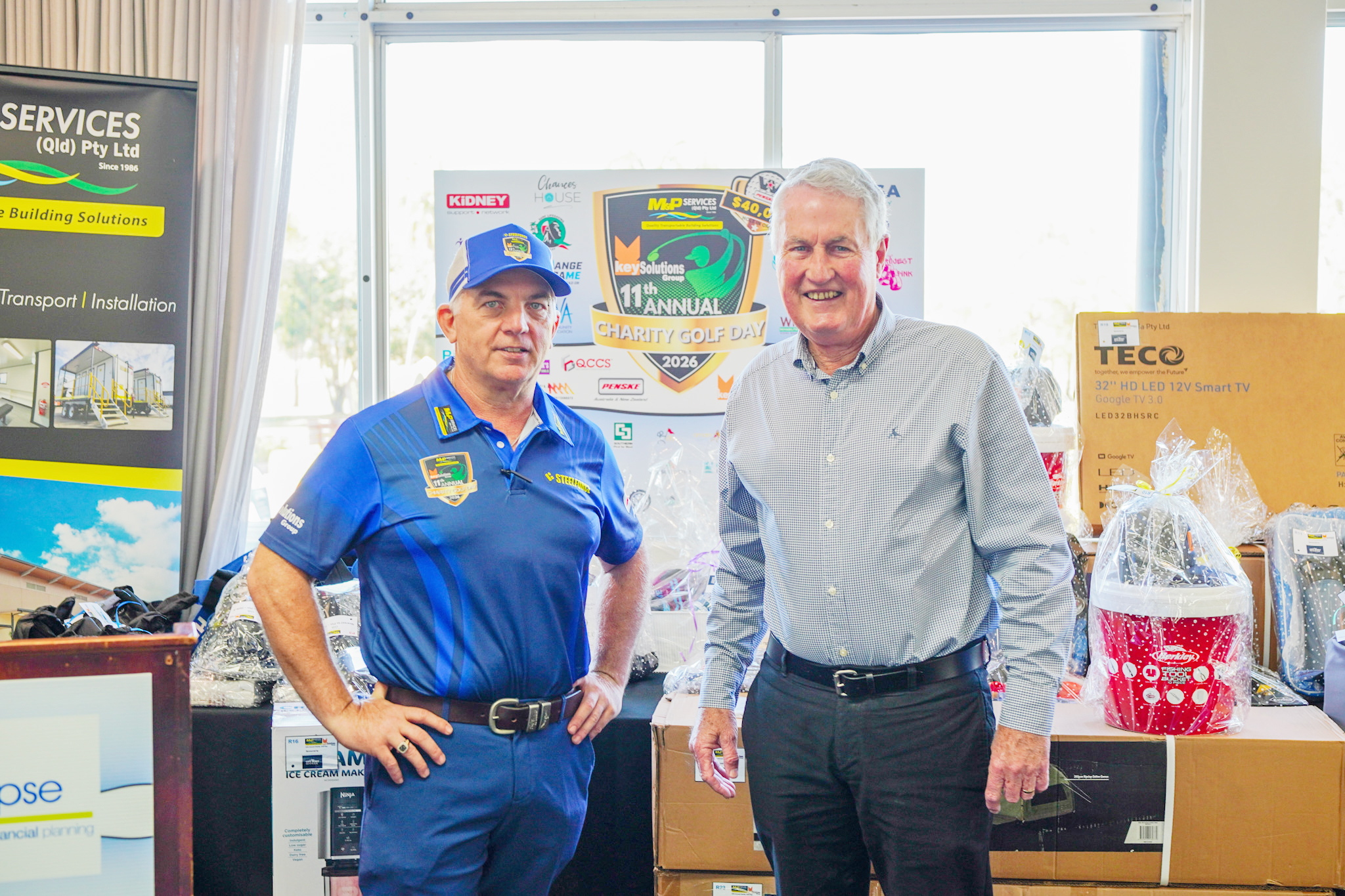
Giving back to the community. We’re very proud of our annual golf day; we’re holding our eleventh this year. Last year, we raised $75,000 to distribute amongst 13 different local charities.

Nicole Knapman – Team Member of 15 years
“Working at Funk It Up Mackay is an absolute joy. A first-time client visit back in 2008 has grown into 15 years as the longest-standing employee - and most importantly, a forever friendship with Corissa. To work alongside people you genuinely care about and growing together is incredibly special.
The work culture is warm, supportive, and full of heart, and our amazing clients make every day even better. Watching familiar faces return, celebrating milestones together, and building genuine relationships makes coming to work feel like so much more than just a job.”
Jo Higgins – Long-Term Makeup Client
“I don’t know what I’d do without Funk It Up. I know I can walk in, sit down, and just breathe. There’s no stress — I know I’m in the best hands.
It never feels rushed or transactional. It’s like hanging out with a friend who just happens to make you look fabulous.
Congratulations on 20 years. It speaks volumes about your talent, your work ethic, and your care.”
Jody Euler - Director of redhotblue and long time funk-it up fan
Corissa is brilliance. Twenty years ago, she dared to dream big and then made it happen, all with her signature sparkle and pink lips.
A bold vision has grown into an absolute powerhouse; a community that champions confidence and individuality, making people feel their best.
Twenty years in business isn’t luck; it’s unwavering passion and standards that never drop. It’s showing up, brush in hand and making the rest of us look so darn good.”
Karlie Bourke – Team Member of 15 years
“I’ve been part of the team for 15 years, creating unique looks for beautiful clients.
What makes Funk It Up special is the teamwork, support, and understanding among the staff. Being surrounded by talented, caring people is something special.”
Whitney Board – Team Member of 10 years
“Working at Funk It Up is like being part of a supportive, welcoming family.
Working on and off between having my five kids, I’ve always been encouraged, valued, and made to feel right at home. The flexibility, understanding, and genuine care make me love coming back.”
Chantel Probyn – Long Term Brow Client
“I first met Corissa from Funk It Up at a bridal expo back in 2013.
I engaged Corissa for my wedding brows; the beginning of a 13-year relationship where I attended brow appointments every two weeks without fail. That kind of loyalty doesn’t just happen because someone’s good at what they do. It’s because of who they are.
Our relationship has grown into genuine friendship, as we shared milestones and celebrated wins with laughter, tears and everything in between. Corissa is a sounding board, a hype woman and a constant supporter.
Of course, she does the best brows. I would not trust anyone else. But what truly sets her apart is her heart.”
Jana Schweitzer – Long-Term Makeup Client
“For more than 15 years, Corissa and her team have been there for my every milestone, with an unmatched ability to make me feel like a supermodel every time I leave the chair.
There is honestly no better feeling than when they spin you around to reveal the finished look. Their professionalism, artistry and welcoming energy make every appointment special.”
Andrea Mitchell – Long-Term Client
“Wow 20 years! That just gives me all the feels. It’s been an amazing ride.
So proud of you and your passion, perseverance, innovation and creativity that has set the foundations and shaped the successful business that it is today. Congratulations.”
Kaylissa Crowley – Team Member of 10 years
“Reaching 10 years with Funk It Up has been one of the greatest honours of my career.
Each occasion brings its own unique energy that I never take for granted.
Working alongside such an inspiring group of women has shaped me both professionally and personally since I was just 15 years old.
Corissa’s guidance and support have impacted me in more ways than I can express.
Funk It Up is a home away from home — a community of strong, supportive women who inspire, encourage and uplift one another every day.”
Jason Chetcuti – Long-Term Creative Collaborator
“It has been an absolute pleasure to collaborate on photoshoots, events, and Fashion Weeks with Corissa and the Funk It Up team. They consistently translate our vision into high-art expressions, executing makeup styles at the highest level.
The team has truly supported my creative journey.”
Jo Sainsbury – Long-term Makeup Client
“Corissa is one of the most creative, artistic and intuitive makeup artists.
She understands exactly what suits you and your personality. You always feel like a million with quality products guaranteed.
It is always a fantastic experience in every way. Corissa Ivory and Funk It Up Makeup. . . elevating everyday beauty into something extraordinary!
Go on…Get Your Glo On.”

Many know Corissa Ivory as an established makeup artist. Those who truly know her, however, know she wears her heart on her sleeve, leads with compassion and is always ready with a laugh, both in and out of the salon.
This year marks 20 years of Funk It Up, after two decades of glamour, growth and memorable moments shared with the Mackay community.
“20 years has flown,” Corissa reflects.
“I still remember every special day, every occasion, every location.”
When she pauses to take it all in, she admits it’s “quite an overwhelming emotion.”
While her talent has opened doors to remarkable opportunities, including fast-paced runway events she describes as “the most fun, most adrenaline-filled, highlights of my life,” Corissa is quick to redirect the spotlight to her biggest supporters.
“I couldn’t function without them,” she says of her team.
Many have stood beside her for 10 to 15 years.
“The care is there and the friendships are still solid. Without our team, without our clients, there’d be no Funk It Up still here… I would have crashed and burned a long time ago.”
The salon itself hums with personality and vibrancy.
“We love it when we’re all together. It’s very fun, like home, and loud,” she laughs.
“It’s very loud.”
Yet beneath the energy in the room is something far more important – connection.
“I don’t want to be a façade, and I’m definitely not in it for the money. I just want everyone that walks through these doors to feel beautiful and heard.”
For two decades, connection has remained at the centre of Funk It Up.
“I think how you make people feel is probably the most important thing that you can achieve in your day,” Corissa says.
“For me, knowing I’ve achieved that means more to me than anything.”
When clients open up in the chair, she considers it sacred, and a true honour.
“For someone to share something with you is the greatest compliment that you can have as a person, because it means they trust you and they feel comfortable with you… I just love that.”
From pamper parties, now nearing the 800 mark, to more than 1,500 weddings, the team has been present for their clients most cherished milestones.
“Highlights for me are being present in those moments,” she says.
“I want people to leave here feeling like they’ve had the best experience.”
Watching young girls grow from pamper party guests, into graduates, and even brides has been a full circle moment for the team at Funk It Up to witness.
“I really do love what I do.”
Behind the businesswoman is a devoted mother and wife.
“I’ve made it pretty clear to everyone that he comes first,” she says of her son Logan.
“My business isn’t my baby. Logan is my baby.”
She credits her husband, and even the partners of her team, for the unseen support that keeps the wheels turning, especially during the whirlwind of wedding season and busy Saturdays. On Sundays, she dedicates her time to her son and husband, recharging for another successful week ahead.
As for the future, renovations may be on the horizon, but the heart of Funk It Up will remain unchanged. As the exclusive Mackay stockists of Australian professional makeup brand Harlotte Cosmetics, she remains “so humble and grateful” for the loyalty that has defined the business with others in the industry.
And at 20 years strong, Corissa isn’t slowing down.
“I have no plans to finish up anytime soon. At the moment, the joy is still here. We still love it.”
Perhaps that’s the secret — not just beauty, but belonging.
“I want to say a huge thankyou to our clients and team members – I couldn’t have done these last 20 years without you!”